
I grew up shy. I didn’t speak up to many people and I always had my arms crossed trying to avoid people. Around 5th grade I moved schools and decided to audition for a play about pirates. I got the smallest role possible in the entire cast but I was happy, and the theatre teacher started to work with me. She would tell me to project my voice, use more emphasis, and take up more of the stage.
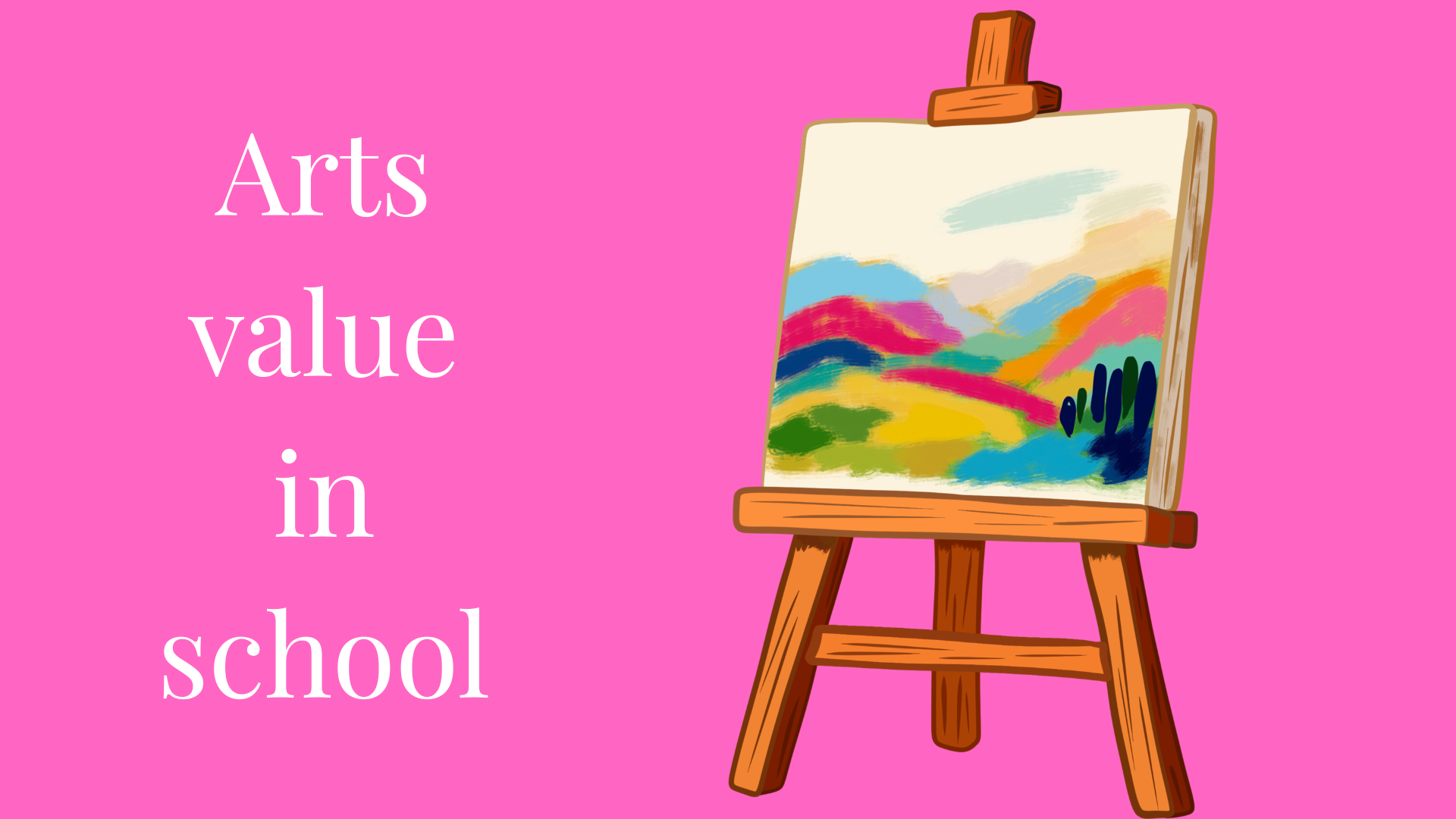
When we finally performed the show I had never felt so happy to be a part of the theatre community. I did theatre for the next four years and starred in show after show. Like me, some students thrive in creative environments. For this reason schools should prioritize fine arts as a part of students’ curriculum.
Art is a vital tool for a child’s brain development. A study from BioMed Central Ltd. Complementary Medicine and Therapies by Clara James et al. found that students who participate in music and visual arts actually do better in their other school subjects. This is because the skills learned in art classes help improve overall academic performance.
By putting more music, theater, and painting into schools, we can help kids improve both their moods and their ability to learn. Without these creative outlets, children may miss out on reaching their full mental and emotional potential.
Art can allow children to express what they can’t communicate without rules, standards and academic pressure in other subjects. Author Jessica Hoffmann Davis analyzed the importance of art within schools in her book, “Why Our Schools Need the Arts.”
“The arts supply the content for what is learned, serve as a model for teaching, learning, and assessment, and provide a window through which non-arts subjects are explored”(Davis 14).
Art can help kids understand themselves, and give them more opportunities in their futures. I’ve always loved art, whether it was performance or independent. The experiences I’ve had with art shapes who I am now and will continue to shape my future. Schools should give students a place to experience and learn.
“Whether the making of art will train students as future arts producers or as arts perceivers, arts learning allows the individual to encounter himself or herself doing what human beings do uniquely”(Davis 47).
If more funding is applied to creative classes and extracurricular activities it provides healthier development, more opportunities, as well as futures in the creative world.
Students’ curriculum should allow for more fine art opportunities and classes.