
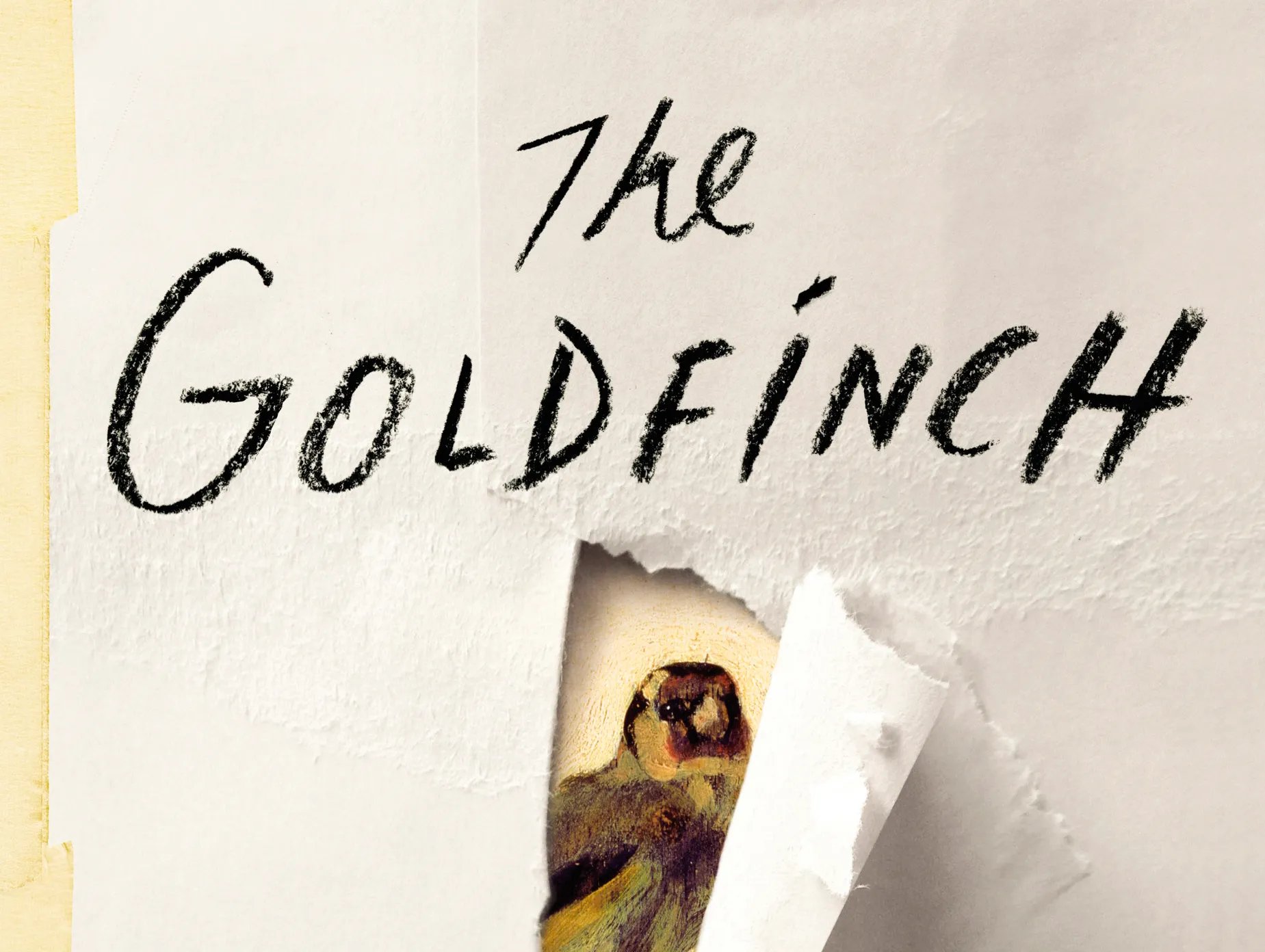

Donna Tartt’s Pulitzer Prize-winning novel “The Goldfinch” is a masterfully crafted work of fiction that explores moral chaos in the wake of unprecedented tragedy. The story follows Theo Decker, a 13-year-old New Yorker who must grapple with feelings of guilt and grief after his mother dies in an accident that he miraculously survives.
Because his father abandoned him in years prior to the story, Theo is temporarily taken in by a wealthy Park-Avenue family. Despite the various comforts the rich have to offer, Theo still finds himself longing for his old life and completely thrown out of balance, until he stumbles upon an antique shop in Greenwich Village, where he finds refuge between the dusty shelves. The owner of the shop, an elderly man named Hobie, also has a unique connection to the tragedy that killed Theo’s mother, and Theo finds comfort in their similarities.
The story continues moving through the different stages of Theo’s life, all the way from the bustling streets of New York City to the dry desert outside of the Las Vegas strip, where, still burdened by his guilt and grief, Theo finds easy access to a variety of alcohol and drugs (“When I lost her I lost sight of any landmark that might have led me someplace happier, to some more populated or congenial life,” [Tartt 7]). He continues these destructive habits of substance abuse through his adulthood, and his dependency on drugs to numb his emotions highlights his chronic state of depression and emotional instability.
As for his close relationships, Theo does not make many casual friends, but instead builds strong connections with specific people, such as Hobie, and a girl named Pippa, whom he is utterly infatuated with. Later in his adulthood, Theo becomes engaged to a woman named Kitsey, but their relationship is written as shallow and built more on ulterior desires rather than true love. Out of all these relationships, Theo has one true “best friend, Boris,” who, according to Michiko Katutan of the New York Times, is “one of the great recent fictional creations.”
Boris is a deeply flawed character (being one of the main sources of Theo’s adolescent drug use) with trauma of his own, but often serves as a carefree and comedic contrast to Theo’s darker and sarcastic demeanor. Boris, after years of separation, re-enters Theo’s life as an adult by a seeming coincidence, but he later reveals a startling truth regarding a precious object that Theo has carried since the fateful day his mother died: a small, captivating painting that reminds him of her. Theo has clung to this painting for emotional support, but as he has matured and realizes the potential consequences for keeping it, his anxiety of someone discovering his secret grows, until his life is clouded by paranoia. Theo is soon drawn by the potential consequences of keeping his painting into, along with Boris, a dangerous world full of fraud and violence, where the repercussions of their actions could prove fatal.
The novel is intended as an adult fiction work, similar to Tartt’s other novels, “The Secret History” and “The Little Friend”. Upon reading the description, I was immediately fascinated by the psychological aspects of the story as well as the focus on art. Compared to “The Secret History”, which is a group psychological horror, “The Goldfinch” is more individually focused and delves further into Theo’s internal struggles in the wake of his mother’s death rather than the shifting group dynamics in “The Secret History”. To me, “The Goldfinch” was about finding beauty in art amidst the chaos and cruelty of the world. I enjoyed this novel more and found it to be, as Stephen King described, “a triumph.”
The novel is a whopping 771 pages long, and I would not recommend it to a novice reader, but for those looking for a deliciously in-depth novel with lengthy and imagery-filled descriptions, “The Goldfinch” is the perfect candidate. Within this epic, there are a variety of themes: trauma and loss, the impact of art, guilt and morality, and identity. However, a single quote from later in the story while Theo is lying next to his fiance, pondering, encapsulates the heart of the novel:
“To understand the world at all, sometimes you [can] only focus on a tiny bit of it, look very hard at what [is] close to hand and make it stand in for the whole…” (Tartt 603).
Tartt does not focus on the world as a whole, but rather breaks it apart, bit by bit through Theo’s eyes, until each element of the story serves as an individual brush stroke, and by the end a literary masterpiece has been painted.
Overall, through morally flawed characters, vivid imagery, and insight into both the artful beauty and grim misery that is life, Tartt skillfully crafts an emotional rollercoaster that had me mourning the end before the first chapter was over. “The Goldfinch” by Donna Tartt is a masterpiece truly worthy of the accolade Modern Classic. I rate this book a perfect 5/5 stars and would recommend it to any avid reader willing to take on a poignant, lengthy challenge.


![IMDb. [2014]. Movie poster. Net, https://www.imdb.com/title/tt1490017/.](https://fhspirateer.com/wp-content/uploads/2026/02/The-Lego-Movie-header-810x1200.jpg)
![Rotten Tomatoes. [2004]. Movie poster. Net, https://www.rottentomatoes.com/m/eternal_sunshine_of_the_spotless_mind.](https://fhspirateer.com/wp-content/uploads/2025/12/Eternal-Sunshine-of-the-Spotless-Mind-header-1-800x1200.jpg)